

The Green-Fingered Ghost of Hyperfocus Future
A fledgling obsession with gardening, and a bitter feud with a pigeon

Hyperfocus gets a bad reputation sometimes in the ADHD world—the things we focus on that make us brilliant at something for three weeks and then leaves a trail of abandoned equipment in the garage. The pattern is familiar enough that most of us have stopped taking our own obsessions seriously.
But what if some hyperfocuses aren’t destined to be temporary? This week’s Extra Life starts with my ongoing feud with a wood pigeon, but ends somewhere more interesting—a theory about what determines whether an ADHD fixation burns out or takes root.

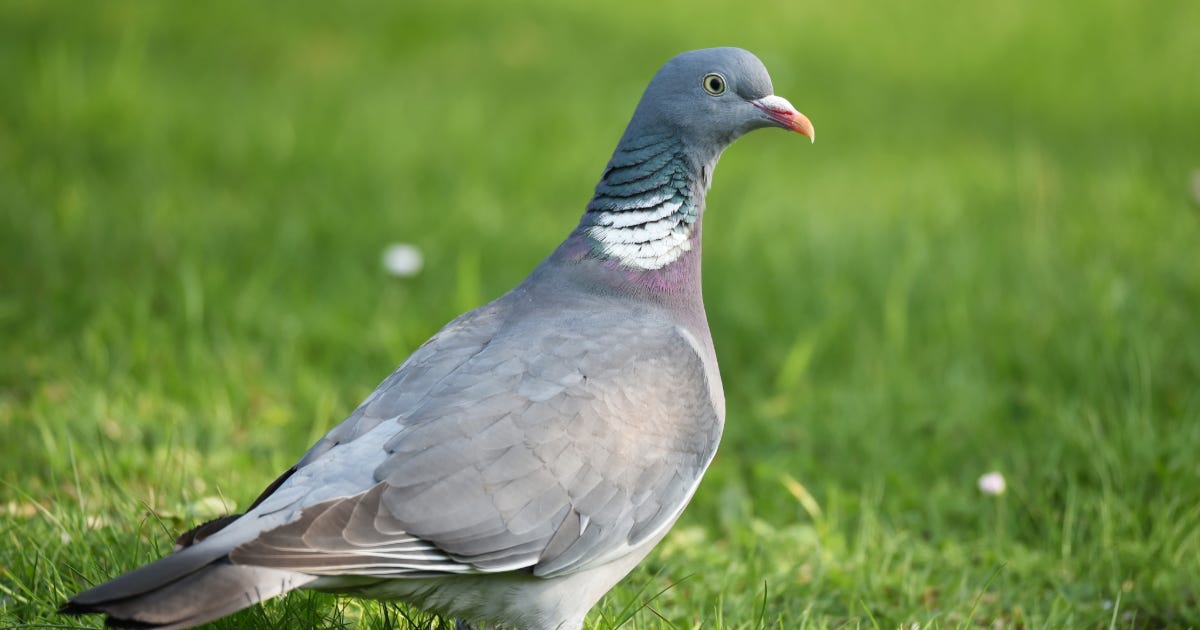
A wood pigeon keeps shitting in my garden.
The recent warm weather and increased time in the garden playing with my kids alerted me to a situation on our back lawn. We’d spent the previous few days playing catch, football and generally messing around. Then came the final day of half-term, and the kids wanted to go out for one last kick-about. I went outside, and noticed something on the grass.
Then another, and another, and another.
I couldn’t remember ever seeing a fresh bird shit right on my grass—and yet there were at least a dozen there this morning, glistening in the morning sun. My irrational and suspicious mind immediately jumped to an unhinged conclusion—that my neighbour was collecting them and flinging them over the fence.
But my suspicions were quickly allayed, when I saw him. A wood pigeon—a big one, as well—strutting across my grass, pecking at the ground.
Naturally, I did the only rational thing I could do—I ran at it and scared it off. It flew up onto the fence of our neighbouring garden where I couldn’t get at it anymore, and it waited. I saw it plotting its next foray into my garden, its next shit-binge on my lawn. All I could do was walk back inside and wait.
And within an hour, there it was again. This told me it was definitely the same one.
At first I thought maybe it was dying or something, or it’d eaten something particularly disgusting which made it produce so much poo—way more than I’d ever seen on my grass before—but some Google searching told me I was wrong again. The reason pigeons come back again and again to a particular garden is if it has an especially well-cut lawn.
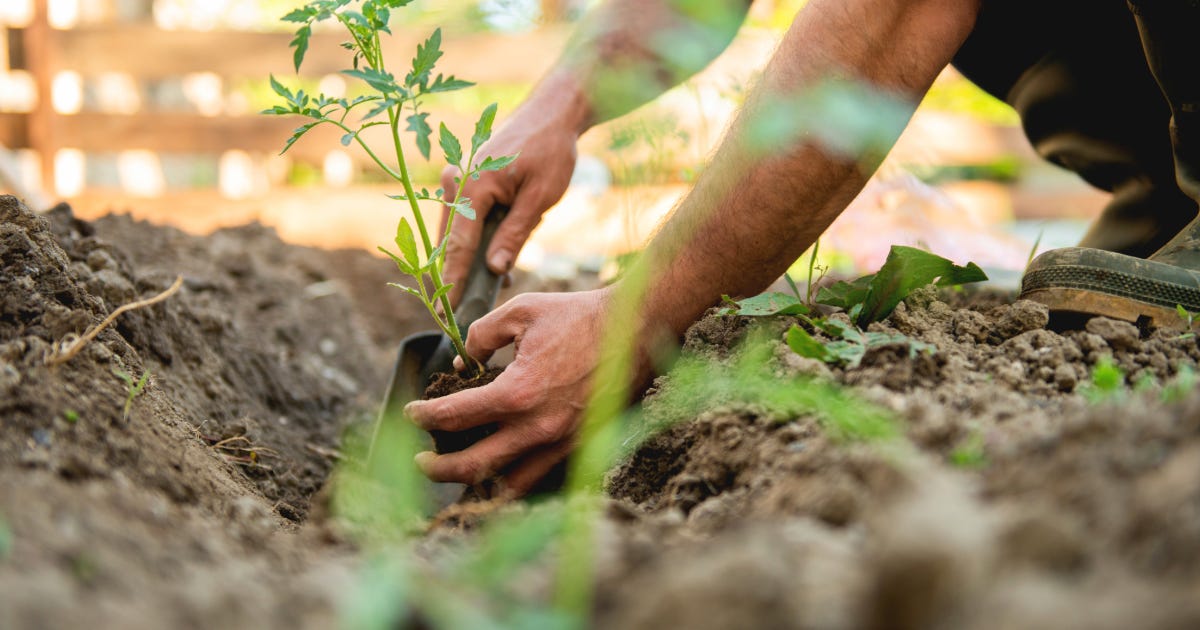
This is the cost of my slowly-growing gardening obsession—because this is where it all started.
This week’s edition of Extra Life is free for all 🙌
If you want an extra issue every Friday—plus the Tuesday epilogue; tips and advice; recommendations; and Hard Mode: Unmasked, the new audio series recorded from inside post-diagnosis life—you can get a 14-day free trial of the full Life on Hard Mode offering
Become a member 👇
Because I’m such a gadget-whore, when I saw that Lidl was selling its robot lawnmowers again for a price way below the average you’d get one elsewhere, I jumped at the chance. Our grass had rapidly begun to grow again as winter drifted away into spring, and I simply could not be bothered to get back into mowing it myself.
I’d never had an interest in garden maintenance until this point—I’d always end up mowing the grass when it was knee-high, and thus it would take way longer and then I’d resent doing it even more the next time. We had been lucky in the past few years to have someone locally who mowed grass for very cheap do it for us, but when they moved away I was liable to get the old Flymo out of the garage again—a prospect I couldn’t face.
So what better solution than a cute little semi-autonomous lawnmower to do it for me? As a bonus, I could stare out of my office window when I was meant to be working watching the little bastard pootle around, bouncing around the garden, turning at the edges and shooting off in random directions like the DVD logo. Instead of hitting the corner though, it gets stuck on its docking station and I have to go and help it get free.
It certainly solved the problem and actually meant I could always look out at a well-kept lawn…which pleased me in a way that nothing to do with gardening had ever done before.
And so further purchases were made.
The limitations of the Lidl mower were that the very edges of the lawn didn’t get cut, so I’d still have to strim them. But, sick of dealing with the short cable of my existing strimmer, I bought a new one—a cordless one. No more strings to hold me down, as Pinocchio said. I think he was talking about cutting his grass as well…or maybe not. Not important.
The new strimmer completed my suite of new gardening devices—or so I thought. With a lovely well-kempt lawn, I noticed the amount of weeds that had sprung up on it. This hadn’t bothered me at all before now. But we all know what it’s like when that seed of a hyperfocus starts sprouting—we can hardly think of anything else, and we want action taken right there and then.
I could just pull them up. You know, with my hands. But that seemed boring and mundane. To keep new fixations going, I need to use what the pros use. So I bought a weed puller—it’s basically some spikes on the end of a stick you ram into the ground, twist and pull. It’s probably overkill but it saves my back and—and this is key here—is fun to use. And of course, I bought some grass seeds to scatter in the holes I leave behind.
I got into the habit of getting out in the garden in the morning, taking in a quick few minutes of daylight (which is a proven dopamine boost for ADHD brains), and inspecting the garden. Mainly I’d be hosing down any new bird poos, but I got into a habit of watering the plants we do have growing there, whilst the weather was unbearably hot.
Holy shit, I thought on one of these mornings as I was patting down a patch of compost and grass seeds from another round of weeding…am I a gardener now?

On the street where I live, there are a few retired couples who I often see pottering about during the week. A lot of them are milling about in their front gardens, trimming hedges and whatnot. To be honest, it always used to annoy me. There’d always be someone out there whenever I needed to go and get the bins or something, and it’d end in a chat I really couldn’t be bothered to have.
But I’m beginning not to get annoyed anymore—because I can see why they’re out there tinkering with stuff in their gardens. I’m beginning to see the appeal—and I’m nowhere near retirement age yet, so perhaps the feeling will only grow.
It’s a privilege to have a place where you have a garden, however big—it’s your little patch of earth that you get to tend and look after. The mental health benefits of gardening are well-documented—gardening clubs are even prescribed to some people by doctors as part of social prescribing initiatives.
And sure, there’s some satisfaction that comes with having a nice lawn or being weed-free—but that didn’t feel like actual gardening. It just felt like doing the normal garden maintenance that up until now I was too lazy to do. Hell, even now I’ve got a robot I bought from a supermarket doing most of the work.
But recently, something happened that required me to get into full gardener mode—and it made me realise that this was not just a hyperfocus, but maybe a long-term obsession that I can fully lend my monotropic skills to in the years to come.
We had to move some of our plants in our garden for reasons. One of these was a rose bush. We planted it and gave it fresh soil and everything—but a day or so later it started to wilt.
In the past I would have just left it—but instead I employed all my singular-focus skills to look up how to fix it and bring it back to life. Turned out it had an infection of a common fungus that had been activated by the stress of being moved, and so I pruned the affected leaves and applied some anti-fungal spray I got from the garden centre down the road.
If I manage to pull this off and save this rose bush—and literally bring back a living organism from the dead—that might just be the dopamine shot I need to turn this gardening kick from a passing phase into a life-long hobby.
I guess the point I’m driving at here is that hyperfocuses in ADHD often get labelled as a liability, or a negative—something that distracts you from actual, real-life shit that you need to get done. Or it’s just something you buy all the gizmos for, then leave in the garage and forget. For plenty of things I’ve been hyperfocused on in the past, that’s true.
But I’m starting to wonder if what actually determines whether a hyperfocus sticks isn’t the interest itself—but the feedback loop…whether the thing you’re fixated on gives something back.
Things I’ve been obsessed with in the past have given me control, instant gratification, a hidden world to deep-dive into and understand on an almost cellular level, with rules that make sense and progress that is visible, and wholly mine.
Gardening, it turns out, gives me all of those things. A contained space with clear boundaries, visible, tangible progress, problems with actual solutions…and occasionally, if you catch it in time, the chance to bring something back from the edge.
If the rose bush makes it, I’m in this for the long haul. A monotropic brain needs something it can go deep on—something that keeps giving back the more you put in.
This might be mine.
But first, I have to stop this pigeon.

The Tuesday Epilogue: It Was Never Your Fault
A lot of the reframing work we tend to do goes all the way back into our earliest childhoods. We examine the very first signs—the things that we thought surely, surely would have been noticed by parents, teachers and professionals, but weren’t.
But equally as important is reframing experiences and lessons we taught ourselves as adults—long after the window to catch our neurodivergence early was slammed shut. It’s important to reassess the not-too-distant past because often we are still living by the same patterns and lessons now, in the short time we’ve had to sit with our diagnoses.
In a way though, it’s more painful to look back at your not-so-younger self and all the things they were doing and thinking that you wouldn’t do or think now. The minor adjustments and the differences you could have made to your life even just a few years ago seem less abstract than the ones you could have made 20 years ago.
I’ll never be able to go back in time and throw these stone tablets at myself. I’ve already lived that life where I didn’t know why I did the things I did—and I’ve already laid a foundation of decades of self-blame, negative thoughts and low self-esteem that so many late-diagnosed neurodivergent people know all too well.
But late is better than never. It doesn’t matter when you discover these things about your brain—it could be at 45, 55, 65 or even beyond that.
What matters is that you eventually hear them, put an ethereal arm around your past self, and tell them it’s OK. It’s not their fault. It never was.
This week’s Tips and Advice
Task initiation failure is neurological, not motivational—and the distinction matters when it comes to addressing it
Research consistently identifies task initiation as one of the most commonly occurring traits in individuals with ADHD—and it doesn’t come from a lack of desire or intelligence, rather the dopamine signal that trigger action in neurotypical brains doesn’t fire reliably in ADHD brains, based on importance or intention alone. A 2019 study found that adults with ADHD showed significantly reduced brain activity in regions that are associated with task initiation, regardless of motivation levels. This implies that strategies designed to improve motivation—pep talks and reminders of a task’s importance, for instance—address the wrong mechanism. Strategies that create external triggers—body doubling and visual cues—are more effective.
The rest your nervous system needs after social or sensory overload is distinct from sleep
Every one of us that has experienced autistic burnout knows that sleep doesn’t touch the sides when it comes to recovery—there’s so much more that’s needed. Specialists in autism in adults back this up—autistic adults require significantly longer recovery periods after social events than non-autistic adults, and there are a wide range of suggested routes to recovery than just sleep alone. Low-demand solitude—genuine absence of input, rather than just reduced activity—is one effective recovery mechanism identified. This is why the advice to “just get more sleep” consistently fails autistic and AuDHD adults experiencing burnout.
The routines and structures you built before diagnosis were adaptive—not pathological
One of the most consistent findings in research on late-diagnosed autistic adults is that the coping mechanisms developed pre-diagnosis are generally functional rather than problematic. A 2022 study in the Journal of Autism and Developmental Disorders found that autistic adults who had developed consistent pre-diagnosis coping strategies showed better adaptive functioning outcomes than those who hadn’t, even when those strategies looked unusual from the outside. The takeaway here is that post-diagnosis, the work isn’t to dismantle everything you built. It’s to understand which structures are serving you and which ones you built in response to demands that no longer apply.

3 Things To Check Out This Weekend
📖 The Autistic’s Guide to Self-Discovery — Sol Smith
Sol Smith is a late-diagnosed autistic adult and educator, who writes about the territory this week’s essay covers—decades of masking and self-blame, the work of understanding your own neurology rather than fighting it, and what it actually looks like to build a life around who you are rather than who you were told to be. Smith’s book offers a framework for reframing systematically. Accessible, research-grounded, and written from inside the experience rather than observing it from a clinical distance.
A UK-based podcast and charity founded by autistic and ADHD entrepreneur Ben Branson, built around the premise that neurodivergent people represent a hidden and underserved proportion of the population, whose potential is being systematically squandered by systems that weren’t built for them. The podcast brings together researchers, clinicians and neurodivergent people to discuss the gap between capability and output, the cost of going unrecognised, and what changes when you get the answer to the question you’ve always asked about yourself.
✍️ Seven Years After Diagnosis I Am Still Masking — Marie-Christine Oliver, The Reframe Diaries
In her consistently excellent newsletter, Marie-Christine Oliver writes about what she calls survival masking—the kind that forms in childhood when being yourself isn’t safe, and the kind that doesn’t come off the way social masking does. This piece also examines the structures built unconsciously over decades that persist long after the conditions that produced them have changed. Oliver’s writing is careful and precise, and this piece in particular is worth reading for anyone who recognised themselves in this week’s Tuesday essay.
Have you got any recommendations for next week’s 3 Things? Let me know.
Community Question
This week’s piece covers eight things known at 35 that weren’t known at 25—from task initiation failure to the routines that turned out to be survival infrastructure. You know where this is going…
What would you tell your past self about the way your brain works?
If you could go back and hand your younger self one piece of information about how your brain actually works—one thing that would have changed how you explained yourself to yourself—what would it be? I would go first, but I kinda already did!
Thanks for reading this free edition of Extra Life—the bonus weekly newsletter from Life on Hard Mode!
To get Extra Life every week—as well as the full back catalogue and the new audio series—upgrade your membership today.
You can get started with a 14-day free trial 👇
And in case you missed it, here’s the first episode of the new weekly audio series from Life on Hard Mode—Hard Mode: Unmasked!
Hard Mode: Unmasked #1 - Alexa, Stop!

This is Hard Mode: Unmasked—the audio series from the Life on Hard Mode newsletter, for late-diagnosed neurodivergent people still figuring it out. Unpolished and unscripted, these weekly mini episodes are honest thoughts and reflections from inside the post-diagnosis experience from someone (that’s me—fulfilling the ambitions of every white millennial man by starting a podcast) still riding the crest of the wave after being diagnosed as autistic and ADHD at 35.
"My irrational and suspicious mind immediately jumped to an unhinged conclusion—that my neighbour was collecting them and flinging them over the fence." 🤣 Spat out coffee and laughed out loud!
Not so irrational, suspicious & unhinged when you think about how natural it is for our human minds to try to make sense or meaning from things we haven't encountered before.
I love that you shared your first 'thoughts' with us. My first thoughts are often just as quirky. I guess the trick is to not immediately start gathering the pigeon shit up and flinging it back over the neighbours fence 😉🤣
Thank you so much for your recommendation Brad, I am honoured! 💛